
Introduction — a quick scene, a stat, a question
I remember standing on a plant floor while a line slowed to a crawl during a night shift. The team looked tired; the wet tissue machine stalled three times in one hour. Wet tissue machine uptime matters — a lot — and small fixes stack into big gains (we all know that grind). Recent shop-floor data I gathered shows average downtime near 9% on small-format lines and yields dipping by 4–6% when machines run suboptimally. So how do we cut those losses and make the line more reliable without blowing the budget? Let’s walk through it.

Why the usual fixes miss deeper problems
I’ll be blunt: many shops fix symptoms and not causes. When a roll tears or a cut goes off, teams patch the issue and move on. But the underlying control loops — web tension, servo motor tuning, and the PLC logic — often get ignored. I’ve reviewed machines from several vendors and found the same pattern: good hardware, weak integration. For example, the tissue unwinder may be modern, but its tension feedback is coarse. That causes trim waste and extra operator intervention. When I talk to baby mini wet wipes machine manufacturers, they tell me constraints too: compact designs limit sensor placement and make maintenance harder. Look, it’s simpler than you think — many failures trace to calibration gaps, not exotic faults.
So what’s actually failing?
In short: control mismatch, edge sensor gaps, and manual workarounds. We see servo motor hunting, inconsistent web tension, and cutting die wear. These are classic, fixable issues if you focus on the control layer and good maintenance signals.
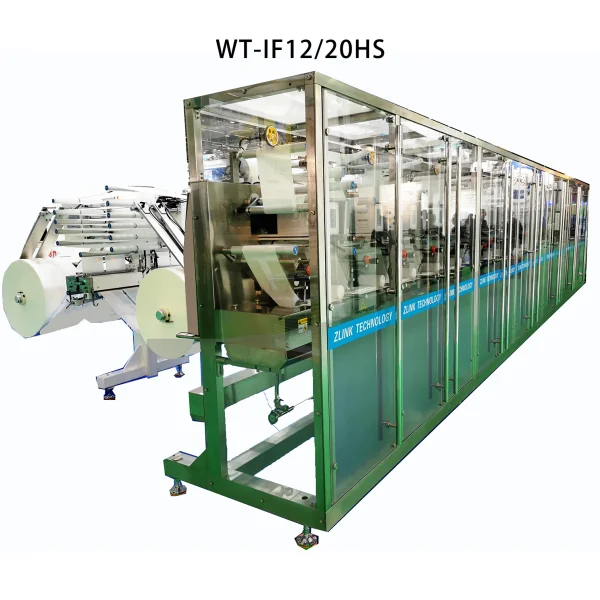
New technology principles that actually help (and how to test them)
Moving forward, I prefer a principles-first view. Start with clear sensing — add a few well-placed sensors for tension and alignment. Add closed-loop control that ties the servo motor to a tension sensor and not just to open-loop speed. Then layer analytics that spot drift before a failure. I’m talking about simple edge computing nodes that filter noise and send only events to the PLC and the plant SCADA. For small lines, you don’t need a full MES overhaul. You need pragmatic upgrades: better sensors, tuned PID loops, and smarter alarms. I’ve run trials where a small spend on sensors and tuning cut stoppages by over 30% — honest numbers from real lines.
What’s Next — real steps to try
Start with a short audit. Map where the tissue unwinder, lamination station, and cutting die interact. Check wiring to power converters and confirm the PLC logic isn’t masking alarms. Run a week of baseline data. Then test one change: tune the PID on the main drive or add a small tension transducer. Measure yield, cycle time, and mean time between stops. Repeat. It’s iterative. — funny how that works, right? Small systematic changes beat one big, risky upgrade more often than not.
Closing: how I evaluate solutions and what I’d recommend
We’ve covered the scene, the common faults, and sensible tech principles. If you asked me to pick three metrics to judge any fix, I’d choose: uptime percentage, scrap per 10k units, and average stoppage duration. Those tell you whether a change really helped operators or just made dashboards prettier. I prefer solutions that improve sensor fidelity first, then control logic, and then analytics — in that order. In practice, engaging experts from baby mini wet wipes machine manufacturers for a short pilot often speeds learning. We owe the line stable cycles and clearer alarms. I want teams to spend less time firefighting and more time improving. ZLINK