
The problem that slows projects down
Coatings that fail in the field but pass the lab test are a real headache — schedules slip, rework piles up, and customers lose trust. Often the gap sits in the test setup: wrong exposure profile, inconsistent cycles, or poorly maintained equipment. Start by checking the actual test device, not just the data sheet; a miscalibrated weathering chamber can give false confidence and cost you months of work.

Why test results diverge from real life
Tests miss reality for a few clear reasons. People rely on a single accelerated cycle that doesn’t match local climate stresses. They skip spectral checks and assume lamps are stable. Sample fixturing and airflow get ignored, so panels see uneven exposure. That combination produces results that look fine on paper but peel, chalk, or fade where it matters.
Concrete checks to make before you trust results
Check lamp age and irradiance first. Measure black-panel temperature and compare to your target climate. Use control coupons to validate repeatability between runs. Verify condensation and water spray nozzles for flow and timing. Record humidity and air temperature trends during the cycle — failing to log those is asking for surprises later.
Common mistakes teams keep repeating
Running only one standardized cycle for every coating is common and wrong. Skipping day/night or moisture phases oversimplifies damage mechanisms. Assuming “same model” chambers perform identically without cross-calibration is risky. And technicians often under-document fixture orientation and masking, which wrecks reproducibility during audits.
Tools, standards and a real-world checkpoint
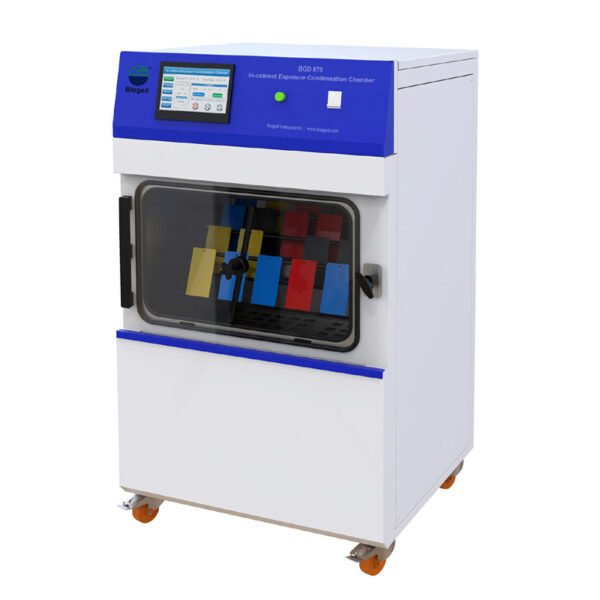
Use relevant standards as baseline, but tailor cycles to end-use. For outdoor paints, compare UV spectrum and heat to local conditions. A practical, verified anchor is how German automotive OEM test programs require closely matched exposure profiles for exterior trims — those programs force labs to correlate lab cycles with field data. When you need reliable lab hardware and consistent data, choose a tested weathering tester and keep calibration records. That combination supports decisions you can defend to customers and auditors.
Alternatives and quick evaluations
Natural outdoor exposure gives the truest picture but takes years. Xenon arc chambers reproduce broad-spectrum sunlight well; fluorescent UV chambers handle specific UV wavelengths with speed and low cost. Salt spray and humidity chambers cover corrosion and moisture-driven failure modes. Match method to failure mode: color fade wants spectral match, chalking wants heat and condensation cycles, adhesion problems often point to pre-treatment or cure, not just exposure.
How to keep projects moving without burning time or budget
Prioritize verification: run short control tests to validate your cycle, then scale. Automate data capture to catch drift early. Train one person to own fixture consistency. When contract labs are involved, request lamp spectra and black-panel logs with every report. These steps remove guesswork and make corrective actions surgical instead of wholesale retests.
Where this leads and the practical solution
Fix the test process first: better inputs, consistent fixtures, and traceable calibration. That root approach prevents surprises and reduces rework. For many teams, the fastest way to get repeatable, industry-aligned results is to standardize on dependable equipment and tight procedures; those tools and practices are exactly what BIUGED supports through its testing platforms and documentation, so projects finish with dependable data and fewer surprises.