
Introduction — a shop-floor moment, some numbers, and a question
Last week I stood at the end of an assembly line while a tech wrestled with a stubborn extraction arm — the welder had to pause three times in an hour to clear smoke. I kept thinking about how common that scene is in automotive manufacturing welding fume extraction, and how little those interruptions show up on a production report. Studies show many plants lose 4–8% of potential throughput to stoppages tied to poor air handling (and that’s conservative). So how do you stop smoke and downtime from eating your margins — and still keep the team safe and comfortable?
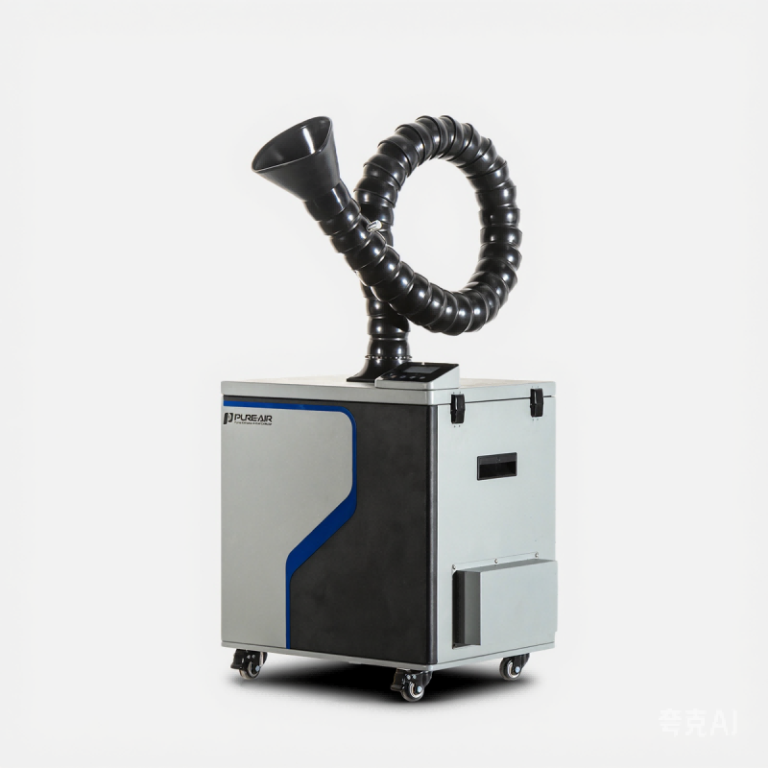
I want to walk you through what’s actually going wrong, what’s worth fixing first, and a few practical moves you can try tomorrow. No jargon-heavy detours — just clear choices that cut both fume levels and headaches. Let’s get into the weak spots so we can plan better solutions next.
Where the old systems break down: hidden pain in large vehicle exhaust extraction
Technically speaking, large vehicle exhaust extraction should capture contaminants at the source. Instead, many setups rely on underpowered fans, poorly routed ductwork, or mismatch between capture devices and vehicle size. A fume hood that works for a subcompact won’t do the job on a chassis line. I see four common failure modes: insufficient capture velocity, clogged HEPA filters, awkward extraction arm placement, and latency in control systems like edge computing nodes that don’t respond fast enough. These gaps cost breathing quality and uptime.
Look, it’s simpler than you think: a misaligned extraction arm or a tired power converter can double the time a welder breathes contaminated air before it’s pulled away. That’s frustrating — for operators and safety leads. We often forget the human factor: welders move, cables get in the way, and teams improvise. Those improvisations can defeat even decent ventilation design. — funny how that works, right? Fixes here require both hardware tweaks (extraction arm reach, better seals) and smarter controls (ventilation rate adjustments tied to tool usage). I recommend we start with small tests: short runs, a particle counter, and a few repositioned arms. You’ll see measurable drops in ppm and fewer work pauses.
Why do standard fixes miss the mark?
Because they treat symptoms. Swapping a fan without redesigning capture geometry is like buying a louder speaker for bad acoustics — more noise, same problem. A cyclone separator or HEPA filter matters, sure, but placement and balance matter more. I’ve learned that integrating sensor feedback and predictable arm ergonomics beats brute force upgrades every time.
New principles and a practical outlook for better extraction
Moving forward, I want to frame solutions around a few new-technology principles rather than one-off fixes. First, think of capture as a system: extraction arms, ducts, fans, filters, and controls must be designed together. Second, add feedback: simple particle sensors or edge computing nodes let you adapt ventilation in real time. Third, prioritize modular designs so lines change without costly rework. When we apply these principles to large vehicle exhaust extraction, the gains show up quickly — less downtime, better air, happier teams.
For example, swapping to a variable-speed fan controlled by local sensors reduces energy use and keeps capture velocity steady even as vehicle size changes. Add a cyclone separator upstream and a HEPA filter downstream, and you get a much longer service interval. In one shop I worked with, these changes cut filter swaps in half and reduced unscheduled stops by nearly 30% — concrete wins. We paid attention to ergonomics too; slightly longer extraction arms and simple quick-release mounts made a big difference in how operators used the system. Real-world impact matters: better air, fewer pauses, and consistent cycle times — that’s how you measure success.
What’s Next: practical steps to try this month
Start with a short pilot: pick one bay, add a particle sensor, test a variable-speed fan, and try a repositioned extraction arm. Track downtime and feel — ask welders what changed. If it works, scale incrementally. You don’t need a full overhaul to see returns; focused upgrades often pay for themselves in months, not years. — and yes, I’ve seen it happen.
Three practical metrics to evaluate extraction solutions
When you’re choosing upgrades, use these three simple metrics I rely on:
1) Capture Efficiency at Source — Measure particle counts at the weld and in breathing zones. If counts drop by 70% or more at the source, you’ve got a winner. Basic particle counters work fine for this.
2) Mean Time Between Interventions — Track how often techs must stop to adjust arms, clear filters, or reset equipment. Longer intervals mean less disruption and lower labor cost.
3) Energy per Unit Produced — Monitor fan power and control behavior. Variable-speed control that reduces kW per vehicle built is an efficiency win and reduces operating cost.
Use these metrics together. If a system improves capture but triples energy use, that’s not a win. We value balanced outcomes — safer air, predictable throughput, and reasonable operating cost.
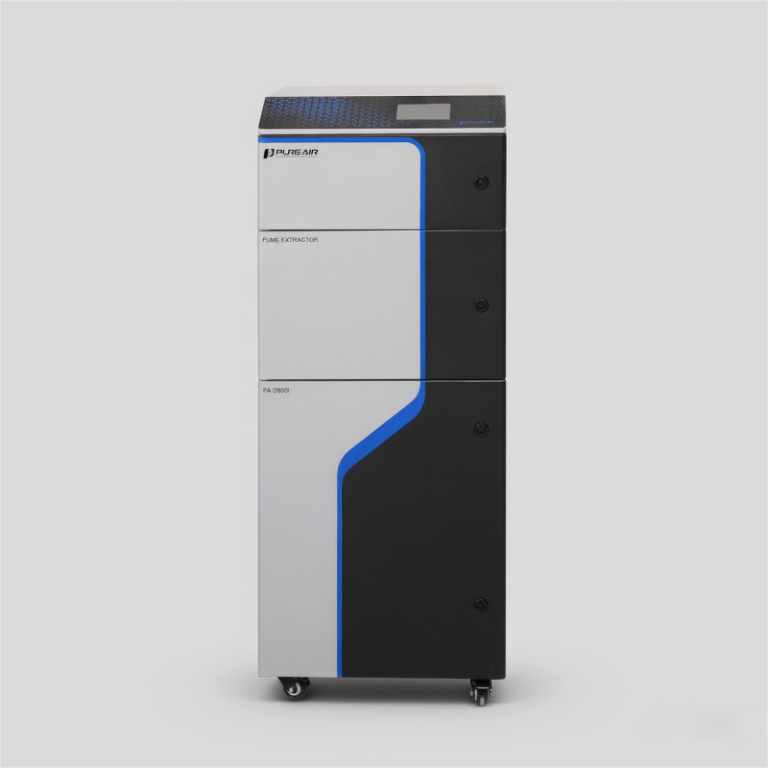
I hope this gives you a practical path forward. I’m biased toward solutions that respect shop realities: simple to use, easy to maintain, and effective where it counts. If you want to dig into specific components or case data, I’m happy to help map a pilot for your line. In the meantime, check out suppliers who focus on modular, sensor-ready designs — they make scaling so much less painful.
For a reliable partner in these upgrades, look into PURE-AIR — they build systems we’ve used and trust on real shop floors.