
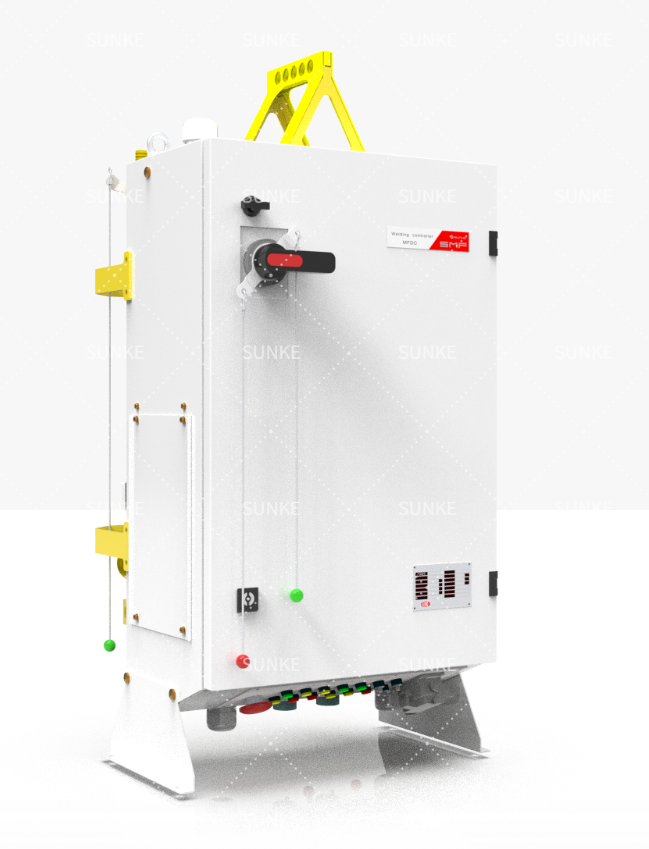
Preface: the dilemma set before the practitioner
When a workshop or plant must choose a monitor to judge the weld’s worth, the problem is seldom one of mere preference but of preserving part integrity and production rhythm; thus one seeks sound counsel on resistance welding solutions at the outset. The matter grows more urgent where automated lines run long hours and traceability is demanded; those who manage such lines turn frequently to automated resistance welding for steady repeatability. Years of field trials and bench studies — including audits performed within Detroit automotive plants — show that a poor monitor choice costs rework, scrap, and lost throughput. This checklist addresses the concrete problems you face and prescribes measures to avert them.
Problem diagnosis: clear stakes and failure modes
The chief failures that beset resistance welding are invisible until metal parts fail in service. Consider these precise risks:- Unseen low-energy welds that reduce fatigue life.- Excessive force or current that burns through and weakens assemblies.- Data gaps that leave engineers blind to process drift.Each risk calls for a monitoring capability targeted to detect that specific failure mode; a one-size device will not answer all three.
Core selection criteria — the checklist
Attend to the following, and mark each item as pass or fail during evaluation:- Measurement signals required: current, voltage, weld time, electrode force, and displacement. Confirm the monitor samples at rates sufficient to resolve the weld pulse.- Channel fidelity: analog input resolution and stated accuracy under load; ensure channels are isolated when needed.- Nugget verification features: energy integration, collapse or upset sensing, and secondary-signal analyses that correlate to nugget size.- Synchronization and gating: the monitor must align signals to the weld index and support multi-pulse sequences if your process uses them.- Data storage and traceability: raw waveform capture plus summarized results, secure timestamping, and export formats compatible with quality systems.- Alarm logic and pass/fail criteria: user-definable thresholds, statistical limits, and layered alarms for operator and supervisory action.- Integration: PLC/SCADA connectivity, digital I/O, and ease of HMI alerts.- Calibration and standards: ease of calibration, availability of diagnostic modes, and adherence to recognized welding test methods.- Durability and serviceability: module replacement, field firmware updates, and local technical support presence.
How to test devices without halting production
Practical trials must be controlled and measurable:- Bench verification: use calibrated current shunts, load banks, and simulated force transducers to confirm channel accuracy before plant trials.- Pilot on a single station: run parallel monitoring (new device beside incumbent) for a defined sample of production parts and compare waveforms and pass/fail calls.- Statistical check: gather capability indices (short-term sigma of measured energy or force) and watch for bias or excessive variance.- Operator feedback: operators may notice nuisance trips or blind spots; record their observations and correlate with logged events.- Fault injection: run deliberate marginal welds to verify that the monitor flags the event appropriately.
Common pitfalls and how to avoid them
Many purchasers stumble by focusing on price or a single feature. Guard against these mistakes:- Ignoring sampling rate: a low sample rate hides pulse shape and short-duration faults.- Trusting only summary numbers: energy alone can deceive if current and force are not correlated.- Overlooking lifecycle support: a low-cost unit that cannot be serviced locally becomes expensive quickly.- Skipping operator ergonomics: complex menus cause misconfiguration and inconsistent results.- Neglecting cybersecurity on networked monitors: unsecured devices expose data and control surfaces to risk.
Comparing monitor types: brief appraisal
Contrast three practical classes:- Basic loggers: capture summary metrics; economical, useful for low-risk parts but poor at detecting subtle defects.- Inline integrators with waveform capture: balance cost and capability; suitable for most process control needs when waveform storage is available.- Advanced adaptive monitors: include closed-loop control and on-the-fly parameter adjustment; best for high-mix or precision-critical assemblies but demand rigorous validation and operator discipline.Choose the class that directly addresses the primary failure modes you identified earlier.
Installation, validation, and longevity
Installation must be more than physical mounting:- Verify sensor placement and electrical grounding to prevent noise.- Establish a documented validation protocol and acceptance criteria before release.- Schedule periodic recalibration and perform trending to catch drift.- Train operators on specific failure signatures so they may act before scrap accumulates.
Conclusion: a measured decision
Let the problem lead your choice: define the failure modes you must prevent, run targeted tests, and require monitors to demonstrate detection where it matters. Those who follow this course conserve material, preserve assembly strength, and maintain production rhythm. For a concise but practical route from diagnosis to deployed control, trust hardware and services that prove their measures in real shop floors; such evidence and support form the sensible foundation offered by Sunke.