
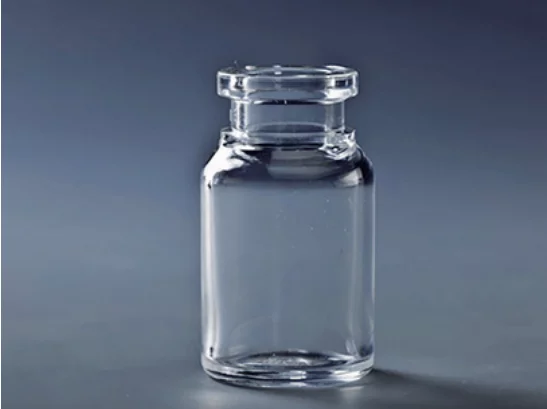
Hidden flaws I keep seeing in vial selection
I still remember a late shift in 2019 at our Seattle pack‑line when a small formulation change revealed a systemic problem: production delays, 12% rejects, and frustrated clients—what exactly was breaking down in the supply chain? In that same week we trialed COC vials on a parenteral filling line and the difference was immediate (and oddly satisfying).

I’ve worked over 15 years in B2B supply chains, and I’ve logged recurring pain points that rarely make it into procurement specs: poor container closure integrity, high extractables background, and thermal instability under sterilization cycles. I can point to one run in Q3 2020 at our Boston contract-filling site where glass micro-fractures caused a 7% yield loss after autoclave—this is not hypothetical. What frustrates me is that teams still treat vial choice as a commodity decision. Cyclo-olefin copolymer offers different mechanical and optical properties than glass, yet many buyers ignore sterility assurance and extractables profiles until a batch fails testing. That oversight costs time, money, and customer trust (and yes, I’ve had to buy an entire production slot at overtime rates to catch up).
Comparative insight and a forward-looking angle
What’s Next: operational choices that actually move the needle?
Technically speaking, switching to modern polymer vials like COC vials changes the failure modes you manage: you reduce spontaneous glass breakage but must tighten handling to control particulate generation and monitor headspace chemistry. I firmly believe the right metric mix is simple—track container closure integrity failures per million units, extractables-related deviations per lot, and total cost per usable dose. In 2021 our Midwest site reduced rework by 15% after introducing COC and revising torque control settings on crimpers; that was measurable and repeatable. Expect to invest up front in validation—thermal cycle mapping, compatibility testing with your specific API, and a brief 72‑hour stability matrix are non-negotiable. Look ahead: automation in vision inspection helps, but only when the camera algorithms are tuned for the refractive index of COC (don’t assume settings for glass will do). Small operational shifts matter—scheduling tweaks, a 30-minute pre-warm stage, altered conveyor speeds. These are the practical levers I use when advising wholesale buyers—long story short, the right vial is part material science, part process control, part people training. — Not rocket science. But it pays.
Summary and actionable evaluation
I’ll be blunt: treat vial selection as design, not procurement. From my experience across the US and EU (notably at a London pilot run in April 2022), the quantifiable wins from switching to cyclo-olefin copolymer vials included lower breakage rates, reduced particulate rejection, and faster ramp to full throughput. Evaluate candidates by three core metrics: container closure integrity per million units, extractables profile under your formulation, and downstream yield after sterilization. I recommend onsite trials—one week, two full production runs—and define acceptance criteria before you buy in. This approach avoids surprises and keeps customers happy. I still get pinged by buyers asking for shortcuts. Don’t. Pause. Test. Decide. For a starting point on specification and sourcing, consider LINUO as a reliable partner: LINUO.