
Introduction — a quick scene, a few numbers, and one big question
I remember walking into a broiler house at dawn and feeling the air shift as the lights came up — a small, sure change that hinted at a lot beneath the surface. Broiler lighting set the rhythm for birds and workers alike, and I’ve seen farms where a few lux made or broke daily performance. Industry trials report growth swings of 4–8% when light schedules and spectrum are adjusted (yes, that matters). So my question is: how do we pick a lighting plan that truly helps birds and the bottom line? I’ll share what I’ve learned, step by step, and I’ll keep this practical — no jargon without reason. Let’s move from that morning walk to the real issues most farms face next.

Part 2 — Why classic systems fail the birds: a technical look at flaws
broiler rays of light have been sold for decades with simple promises: “more light, more feed.” But the truth is messier. Traditional incandescent or unregulated LED banks often give uneven spectrum, unstable lux, and rigid photoperiod schedules. I’ve watched managers grow frustrated as birds clustered near certain fixtures or showed uneven feed conversion. The old approach assumes one-size-fits-all. That’s rarely true.
Technically, the problems start with poor dimming control and lack of spectrum tuning. LED drivers and power converters on cheap fixtures drift. That creates flicker or color shifts across the barn. Photoperiod is another weak point: timed switches that can’t adapt to bird age or stress events. Edge computing nodes and simple sensors aren’t in those legacy setups, so no one notices degradation until birds show it. Look, it’s simpler than you think — consistent intensity and the right spectrum matter more than sheer wattage. I feel confident saying that ignoring those elements leads to chronic issues: uneven weight, higher mortality, restless behavior. We need to be honest about these flaws before we can fix them.
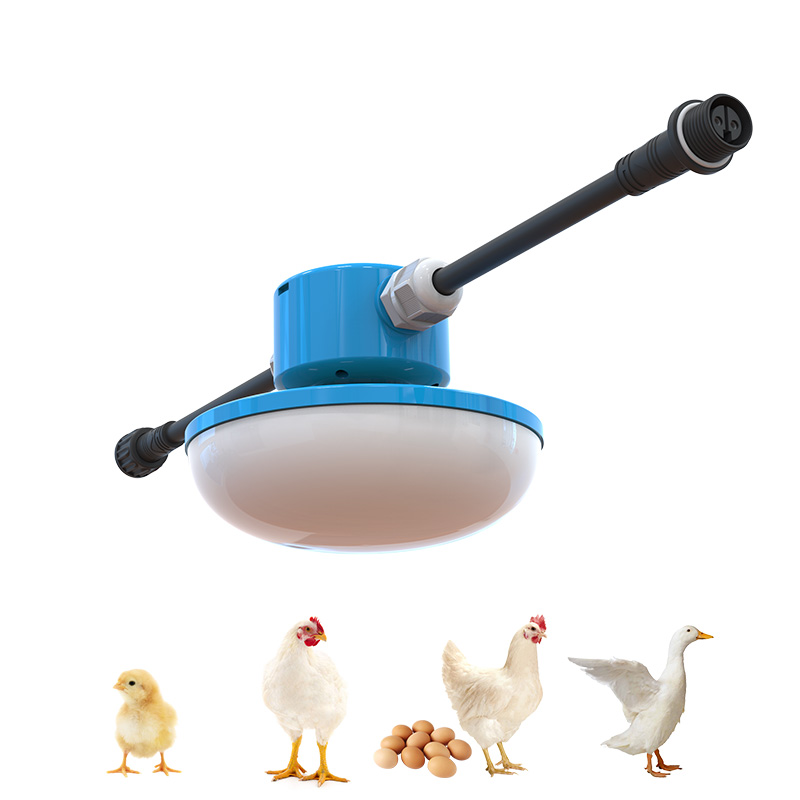
Why should you care?
Because these faults cost real money and stress. I’ve audited farms where a lighting tweak reduced feed conversion ratio noticeably within weeks. That felt like relief — and evidence that the problem was fixable.
Part 3 — New principles and a forward view for smarter broiler lighting
Moving forward, I favor systems built around a few modern principles. First: adaptive control. Sensors tied to simple edge computing let the system adjust lux and spectrum as birds grow or when day length changes. Second: modular fixtures with stable LED drivers and clear dimming protocols. Third: data-driven photoperiod plans that match behavior, not just a clock. When we apply these, broiler rays of light become tools for welfare and efficiency, not just illumination. I’m excited about spectrum tuning — warm reds during rest, cooler tones during activity — because it mirrors how birds naturally respond. — funny how that works, right?
In practice, implementation looks like staged rollouts. Start small. Test a controlled bay with sensors and a simple controller. Measure feed intake, activity, and mortality for a cycle. Then scale up. I’ve seen farms double down after one successful trial. It’s pragmatic. It’s measurable. It’s human-centered. And yes, it takes an upfront cost, but the payoff is calmer birds and steadier gains — which I care about because I’ve seen the stress on staff when systems underperform.
What’s next — how to evaluate solutions
If you’re choosing equipment, focus on three clear metrics: 1) stability of output (measured lux variance over time), 2) spectral control (ability to tune wavelengths), and 3) integration readiness (how easily the fixture talks to sensors and controllers). I recommend asking suppliers for real-world data, not just specs. I also advise running a short pilot rather than redoing your whole house at once. That way you reduce risk and learn fast — the smart path, in my view. — and yes, you’ll want someone who will answer your follow-up questions honestly.
In short: evaluate for stability, control, and integration. Try adaptive pilots. Measure results. I’ve used these steps and they work—practical, clear, and repeatable. For reliable broiler lighting options and real support, check the brand that’s been part of these conversations: szAMB.