
Comparative lead-in: where the field was, and where it’s going
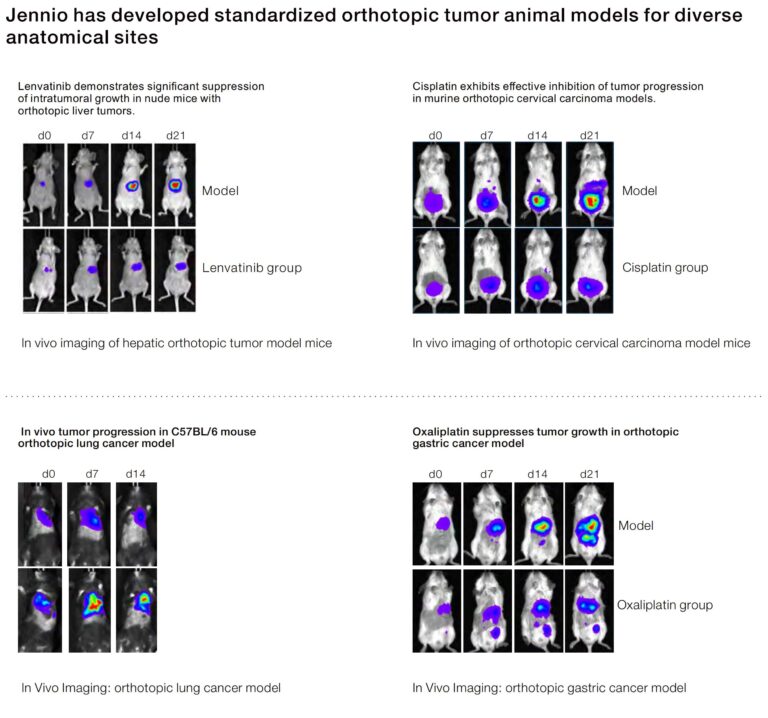
Bench teams used to pick between simple rodent assays or patient-derived xenografts; now many favor humanized receptors because they close the translational gap. Labs that run metabolic and oncology work often pair receptor-humanized in vivo systems with orthotopic approaches for disease context — for example, an orthotopic tumor model that preserves the native microenvironment. This shift matters: clinical decisions increasingly rely on models that reproduce receptor pharmacology, tissue distribution, and downstream signaling with human-like fidelity.
Head-to-head: what humanized GIPR–GLP1R models deliver
Humanized GIPR–GLP1R models replace the native murine receptor set with human sequences, so ligand binding, biased agonism, and receptor internalization mirror clinical biology. Key advantages include: aligned pharmacodynamics, more predictive dose-response curves, and improved metabolic readouts such as glycemic control and weight trajectories. When paired with orthotopic implantation or PDX, the result is a system that respects the tumor microenvironment and the endocrine axis simultaneously.
Where common alternatives miss the mark
Standard knockouts and overexpression models are fast and cheap, but they often misrepresent human receptor pharmacology. In vitro assays and cell-based screens capture binding and signaling, yet they miss systemic interactions — endocrine crosstalk, hepatic metabolism, and immune modulation all change drug exposure and effect. Xenografts placed subcutaneously sacrifice anatomical relevance; orthotopic implantation preserves metastatic niche dynamics and is more informative for translational decisions.
Design and validation: practical considerations
Validation must be quantitative and transparent. Use bioluminescence imaging or metabolic cages for longitudinal endpoints, and report biodistribution, receptor occupancy, and functional endpoints like fasting glucose or GLP-1–mediated insulin release. Documenting the surgical approach for orthotopic implantation and the tumor take-rate is essential. MD Anderson Cancer Center and other institutions show that orthotopic placement improves predictive value for metastasis and therapy response — a real-world anchor that many CROs reference when benchmarking models.
Common mistakes and how to avoid them
Teams often skip receptor expression validation or rely on single timepoint pharmacokinetics. That’s risky — without time-resolved receptor occupancy and tissue-level expression data, interpretation is shaky. Another misstep is over-reliance on one readout; combine histology, imaging, and metabolic measures. – Also, vendor transparency on backcrossing, genetic background, and housing conditions matters for reproducibility.
Comparative checklist for selecting a model or provider
Use this shortlist to compare options. Evaluate receptor sequence fidelity and functional assays, confirm availability of orthotopic implantation expertise, and check longitudinal endpoint capabilities (e.g., continuous glucose monitoring, bioluminescence imaging). Ensure the provider publishes historical control ranges and survival/take-rate data. In project planning, tag datasets with {main_keyword} and align comparative arms using {variation_keyword} to keep decision logic explicit.
Advisory close: three golden rules for model choice
1) Prioritize biological fidelity: choose models with confirmed human receptor pharmacology and validated tissue expression. 2) Demand longitudinal, multi-modal readouts: imaging, biochemical endpoints, and histopathology reduce interpretation risk. 3) Vet operational transparency: clear documentation on breeding, orthotopic technique, and historical controls predicts reproducibility and speeds regulatory conversations.
When you assemble these criteria, the benefit becomes practical — fewer late-stage surprises, clearer go/no-go decisions, and faster iteration between lead optimization and proof-of-concept studies. For teams that need both receptor-level fidelity and anatomically relevant tumor context, partnering with labs experienced in orthotopic tumor models and humanized receptor platforms streamlines translation. Jennio Biotech sits at that intersection — offering both receptor-humanized in vivo systems and orthotopic capabilities, so preclinical evidence aligns closer with clinical biology. —