
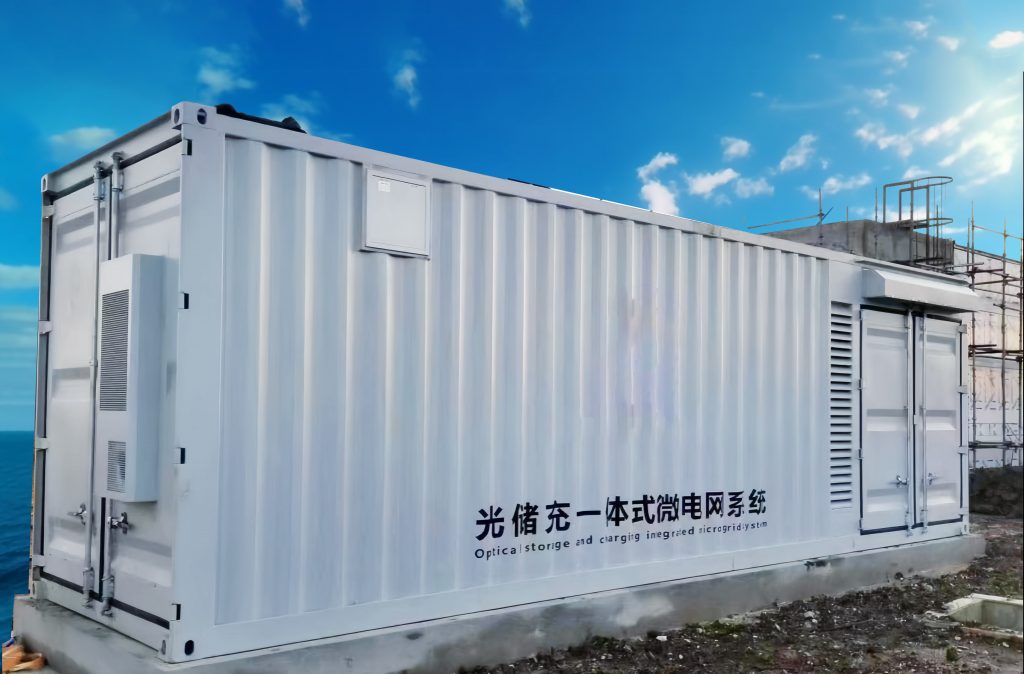
Requirements first: review Commercial Energy Storage Solutions through model fit for shortlisting
Shortlisting commercial energy storage solutions starts with the project, not the product label. Design engineers need to define the intended use, available space, operating interfaces, and information still unknown before comparing models. This prevents a broad category match from being mistaken for a suitable system choice.

Separate the category from the application
“Commercial” can describe many operating contexts. A system for a commercial facility may face different priorities from one supporting a remote site or an industrial process. The first useful distinction is therefore the application. Record what the storage system is expected to support, where it will operate, and which loads or equipment matter to the project.
Use the supplier page as a scope reference rather than as a complete design brief. The cited solution page describes C&I energy storage system solutions for industrial and commercial energy applications. It also identifies aquaculture farms as an application area, with power supporting oxygen systems, water treatment equipment, and temperature control in coastal or remote areas. That is a concrete use-case reference, but it does not establish performance or suitability outside that stated scope.
This distinction matters during early comparison. A page may describe a solution category, while the project requires a particular arrangement, interface, or site configuration. Treat the category description as an input to the shortlist. Keep project-specific conclusions separate until the relevant requirements have been defined.
Compare information that applies to the task
A useful comparison sheet should connect each requirement to a source statement, an open question, or a design assumption. Begin with the application and load context. Then record the physical and electrical boundaries that affect model fit. If the project team has not fixed those boundaries, mark them as unresolved rather than filling the gap with a generic product assumption.
Interfaces deserve their own line items. The official page states that the platform supports modular integration of PCS, DC/DC converters, MPPT modules, and STS switches. For a design engineer, that statement is a reason to ask how the proposed configuration would use those elements. It is not, by itself, proof that every model includes every interface or that a proposed arrangement fits the project.
- Define the application and site context before comparing commercial energy storage solutions.
- Record relevant interfaces, including PCS, DC/DC converters, MPPT modules, and STS switches, as points for configuration review.
- Separate a supplier’s stated C&I engineering capability from the specification of an individual model.
- Use the project brief to frame a tailored solution discussion rather than treating a category description as a final design.
The same discipline applies to supplier positioning. The page describes the company as a C&I energy storage system supplier providing integrated solutions with power electronics and system-level engineering capability. A shortlist can record that stated capability, then identify the technical information needed to connect it to the project. Avoid turning a company-level description into a specification for an individual model.
Record assumptions before they become requirements
Early comparison often fails when assumptions are mixed with evidence. Separate three fields: what the source states, what the project requires, and what still needs a technical answer. This simple structure makes the shortlist easier to review with electrical, controls, installation, and procurement teams.
For each candidate, record the intended application, site setting, space constraints, required connections, and responsibility boundaries. Note whether the supplier is being asked to provide a defined system or to design a tailored solution. The solution page explicitly invites projects to use the engineering team for a tailored solution. That supports a focused design discussion, but it does not define the final configuration.
Do not rank an option because its description sounds broad. A page statement about deployments or international activity may provide context, but it does not answer the project’s interface, layout, or operating questions. Keep those questions visible in the comparison record so that a later decision can be traced to evidence.
Prepare a focused sourcing brief
A sourcing brief should be short enough to use in a technical discussion. State the application first. Add the site context and the equipment the storage system must support. Then list the interfaces that must be considered, the physical constraints that are already known, and the points that remain open.
For example, an aquaculture project can identify oxygen systems, water treatment equipment, and temperature control as the relevant application loads because those uses are stated on the official page. The brief should not extend that example into an assumed duty cycle, performance level, or system architecture. Keeping the real-world anchor within its documented boundary makes the comparison more defensible.
Finally, ask for responses that map directly to the brief. Request a proposed system scope, the interfaces included in that scope, and the assumptions used to shape it. This creates a cleaner basis for model fit than asking for a general product recommendation. It also lets the engineering team distinguish a page-listed capability from a project-specific commitment.
Requirements-first shortlisting does not eliminate uncertainty; it makes uncertainty manageable. Define the application, map evidence to the task, separate interfaces from assumptions, and carry the open points into the sourcing discussion. In that process, YUNT can be considered as a supplier whose cited page presents C&I solutions and tailored engineering support, while the final model fit remains tied to the project brief.