
Opening the Curtain: A Direct Look at Today’s Laser Stage
You’re backstage at a packed arena, house lights fade, cues lock in, and the show either sings or stumbles on the rig’s timing. A laser light manufacturer lives that pressure daily. In recent field reports, roughly four in ten support calls trace back to lighting control or cooling headaches—small faults that snowball into delays. So here’s the friction: the crowd wants precision down to the millisecond, but older systems drift, run hot, and choke when cues spike. Why do smart teams still wrestle with sync, heat, and jitter when the tech should be wicked reliable (we’re in Boston, kid)?
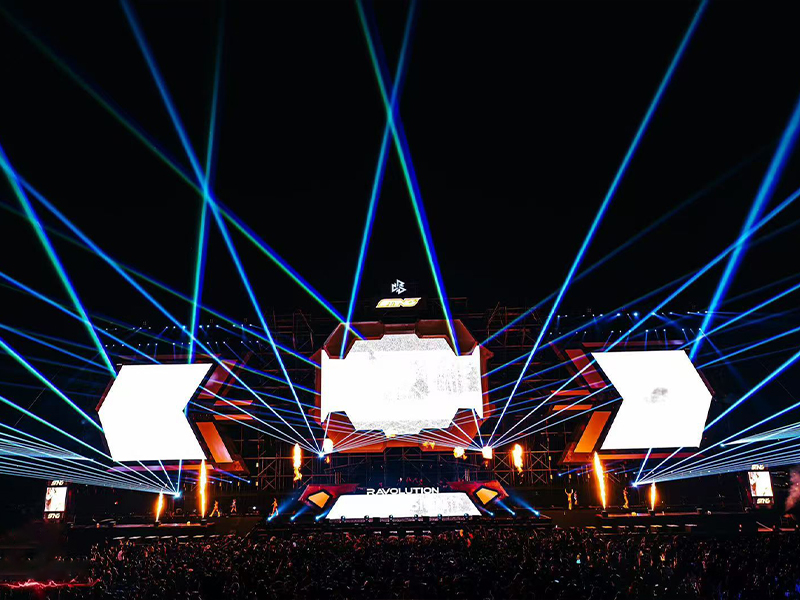
Let’s get real. The gap isn’t only “more power.” It’s about how beams stay tight, how galvanometer scanners hold repeatability, and how power converters handle load swings without tripping safety interlocks. Edge cases are the norm in live shows, not the exception—funny how that works, right? The question is simple: what’s actually holding rigs back, and what changes the calculus for the next tour cycle? Stick with me; the plot thickens in the very places most folks don’t look.
Legacy Gaps: Where Traditional Rigs Lose the Thread
Where do legacy rigs fall short?
Technical truth first: older stacks push DMX512 hard, then treat latency as “good enough.” That’s fine until tight chases meet dense cue sheets. Drift creeps in. Without proper buffering and timecode discipline, scanners hunt and pan overshoot. Beam divergence grows when the optics train warms, so your crisp aerials look soft by encore. Thermal management is often reactive, not predictive; fans kick in late, diodes throttle, and output sags. Look, it’s simpler than you think—when heat wins, image quality loses. And when power converters see abrupt current spikes, protective trips can drop a fixture at the worst moment.
Maintenance is the hidden tax. Legacy housings lack IP65 sealing, so dust slips past gaskets, mirrors haze, and calibration drifts faster. Techs then tweak alignment in the dark—every night. No edge computing nodes near fixtures means diagnostics live at the rack, not at the head, so faults show up as symptoms, not causes. Firmware updates are manual and spotty, which freezes fixes in limbo. In short: the old playbook treats lasers like lights. They aren’t. They’re precision instruments that need stable thermals, clean power, and tight feedback loops to stay sharp from soundcheck to last cue.
Future-Facing: Principles That Make the Next Rig Different
What’s Next?
Now shift the lens forward. The new stack starts with distributed control: edge computing nodes at or inside each head that preprocess cues, stabilize timing, and smooth scanner motion before packets ever hit the motors. Add PID-driven thermal loops that predict heat soak rather than chase it, so beam quality stays stable and M² doesn’t wander. Optics get smarter, too—compensation for beam divergence as temperature shifts, plus sealed IP65 housing to keep mirrors clean. The net effect? You protect output and color stability while cutting nightly recalibration. And when a laser light machine supplier bakes in OTA firmware with rollback, fixes land fast—and safely.
Integration matters. Art-Net and sACN sit beside DMX512, with synchronized timecode to reduce jitter across cues. Power stages use better PFC and faster transient response, so converters ride load spikes without drama. Real-time logs flag galvanometer scanner drift before the audience can see it—so crews adjust during rehearsal, not during verse two. Evaluating options? Use three yardsticks: 1) Beam integrity under stress—track M², divergence, and repeatability after a 30-minute thermal soak. 2) Reliability envelope—IP rating, MTBF, and thermal headroom at rated output, plus clear safety interlocks. 3) Update and service workflow—firmware cadence, remote diagnostics, and how fast a patch propagates across the rig. Nail those, and your show feels tighter, calmer—even when the set list flips mid-run (and it will). In the end, better choices build better nights, and crews sleep easier—funny how that works, right? Knowledge shared, not sold: Showven Laser.