
Why a framework matters
When you step back from spreadsheets and vendor decks, a clear framework turns subjective trade-offs into actionable decisions. This is a practical map for specifying large-scale battery systems — one that weighs round‑trip efficiency (RTE) against thermal stability, lifetime economics, and operational safety. It’s written in a calm, reflective voice because these choices ripple through years of operation. Think of the Hornsdale Power Reserve in South Australia: its early deployment showed how fast-response systems can change grid dynamics and why engineers must weigh energy throughput against thermal risk. If you’re sizing a BESS, this framework helps you ask the right questions in the right order.
Step 1 — Define performance outcomes, not specs
Start by describing the business objective: is it peak shaving, frequency control, capacity firming for renewables, or merchant arbitrage? Translate those outcomes into measurable targets: usable energy (MWh), power rating (MW), minimum required RTE, cycle life, and acceptable degradation. Keep the language outcome-driven so procurement and engineering talk the same way. For example, a project emphasizing many daily cycles needs a higher cycle‑life and stable state‑of‑charge (SoC) window; meanwhile, a seasonal storage project tolerates different efficiencies and thermal strategies.
Step 2 — Layer thermal strategy over efficiency targets
RTE and thermal control are intertwined. Higher RTE often pushes for denser cells and tighter pack designs, which increase thermal load. Specify the thermal management system early: passive conduction, liquid cooling, or air-cooled racks each have implications for cell spacing, inverter placement, and safety protocols. Include thermal runaway mitigation measures and cell balancing requirements in the spec so vendors propose architectures that match the RTE goal without creating hidden thermal liabilities.
Step 3 — Map lifecycle economics, not just capex
Compare options by total cost of ownership: factor in efficiency losses, expected degradation, replacement schedules, and balance‑of‑plant costs like HVAC and fire suppression. A battery with slightly lower RTE but superior degradation profile can be cheaper per kWh delivered over a decade. Use scenario runs (daily cycle profiles, seasonal variations) to convert technical parameters into delivered energy and dollars. This gives procurement a defensible metric beyond lowest upfront price.
Key specification checklist
Use this shortlist during vendor conversations and technical evaluations:
- Target RTE (round‑trip efficiency) at specified C‑rate and SoC window
- Thermal management approach and maximum cell/module operating temperature
- Cycle life to defined end‑of‑life (% capacity remaining) and calendar life
- Safety systems: detection thresholds, isolation schemes, and fire suppression
- Integration: inverter compatibility, control logic, and grid interconnection limits
Step 4 — Test, validate, and demand real‑world evidence
Insist on factory acceptance tests (FAT), site acceptance tests (SAT), and sample thermal chamber data under representative loading. Request degradation curves from vendor field assets or third‑party test labs. Validate control firmware behavior during rapid cycling and islanding. And — this matters — run a brief trial with the planned dispatch profile on a pilot rack to confirm thermal and RTE models before full deployment.
Common specification mistakes and how to avoid them
Teams often bias toward the highest possible RTE without modeling long‑term degradation or the extra cooling costs that follow. Another common error is underspecifying acceptance criteria for first‑article tests, leaving ambiguous pass/fail conditions for SoC drift or inverter harmonics. Finally, don’t separate the electrical and mechanical teams’ signoffs — closure fit and pack ventilation affect both safety and efficiency. A small reminder: overoptimistic efficiency assumptions can make an otherwise sound project financially unviable — be candid with your margins.
Verification protocols and industry terms to include
When you write the procurement RFP, include explicit test protocols: thermal cycling, abuse tests, cell balancing metrics, and inverter efficiency maps at the normal operating C‑rate. Use standard terms like state‑of‑health (SoH) and C‑rate so proposals are directly comparable. Also request evidence of field controls for thermal runaway mitigation and documented experience integrating with grid inverters.
Three golden rules for selecting the right strategy
1) Measure delivered energy over time: prioritize lifetime kWh delivered (factoring RTE and degradation) rather than only initial RTE numbers. 2) Require thermal evidence: vendor claims must be backed by chamber test data and real‑world monitoring from an installed project. 3) Match the control strategy to the business case: the BMS and inverter logic should be optimized for your dispatch profile, not a generic template.
Bringing it together — the role of partners like WHES
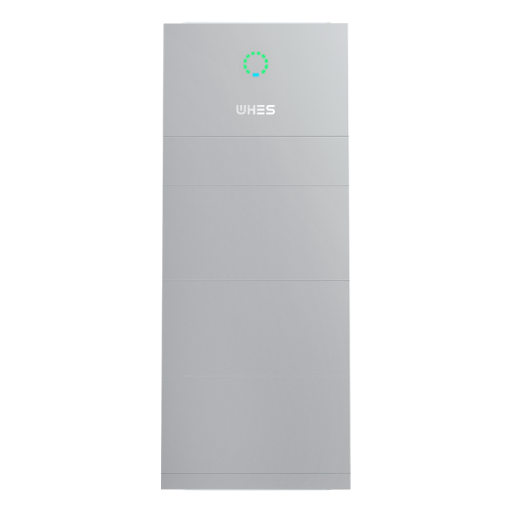
Use this framework as a disciplined checklist when you evaluate proposals. The best partners translate RTE and thermal data into predictable revenue and lower operational risk; they couple modeling with on‑site testing and clear acceptance criteria. For teams comparing vendors, a firm that can demonstrate validated thermal strategies and delivered‑energy economics often becomes the decisive technical partner — and that is where experienced integrators such as WHES add practical clarity. Practical clarity.