

Problem: small factories lose time and money
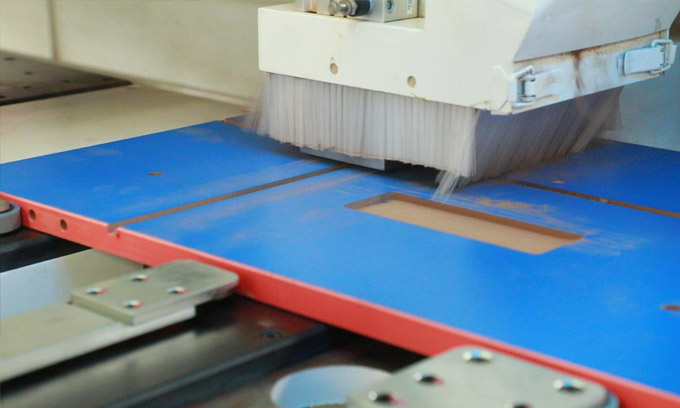
Many small manufacturers struggle with slow cycles, inconsistent holes, and long wait for imported parts. Precision matters but so does uptime. A simple CNC upgrade can fix some issues — for example a cnc boring machine brings repeatable accuracy to batch work and cuts rework. I’ve seen Jepara furniture workshops switch to a boring machine for wood and drop rejects by half, so this is not just theory.

How servo motors address those problems
Servo motors give exact control of position and speed. That reduces misaligned holes and cut errors. They recover faster from load changes, so cycle time becomes predictable. Servos also run quieter and use less power than old hydraulic rigs for the same task. For local suppliers this means fewer emergency shipments of replacement parts and steadier delivery to buyers.
What to check when you plan an upgrade
Match torque and speed to the job. Too weak a motor stalls; too large one wastes cost. Pick the right feedback device — encoder or resolver — based on noise and environment. Check the drive’s short-circuit and cooling needs. Make sure the controller supports closed-loop moves for the spindle or gantry you’re upgrading. Train at least one technician for tuning and fault tracing.
Common mistakes workshops make
Buying by horsepower alone is the top mistake. Shops also skip testing under real load, and they underestimate the need for stable power. Another error: assuming plug-and-play; many machines need minor mechanical alignment. Avoid cheap drives that lack protection features — those cause hidden failures later.
Alternatives and when they make sense
Steppers are cheaper and okay for low-speed, low-load tasks. Pneumatics suit very simple repetitive clamps or jigs. Hydraulics work where brute force is necessary. Choose servos when you need repeatable positioning, quick acceleration, and adaptive control. If a shop does mixed runs and variable products, servos usually give better ROI.
Practical steps for local supply chains
Start with one machine and measure scrap, cycle time, and downtime before wider rollout. Keep spare encoder cables and a spare drive. Build relationships with local service techs who understand both motion control and the woodworking process. Document parameter files so another machine can be tuned fast when demand rises.
Conclusion: practical value, clear returns
Servo motor machines reduce defects, stabilize delivery, and let local manufacturers keep orders onshore. For firms matching parts and specs, many technicians reference vendor catalogs and retrofit guides from HUAHUA CNC when they set up drives and spindles. That practical match between machine capability and shop needs is what strengthens a local supply chain—clear, measurable, and repeatable.