
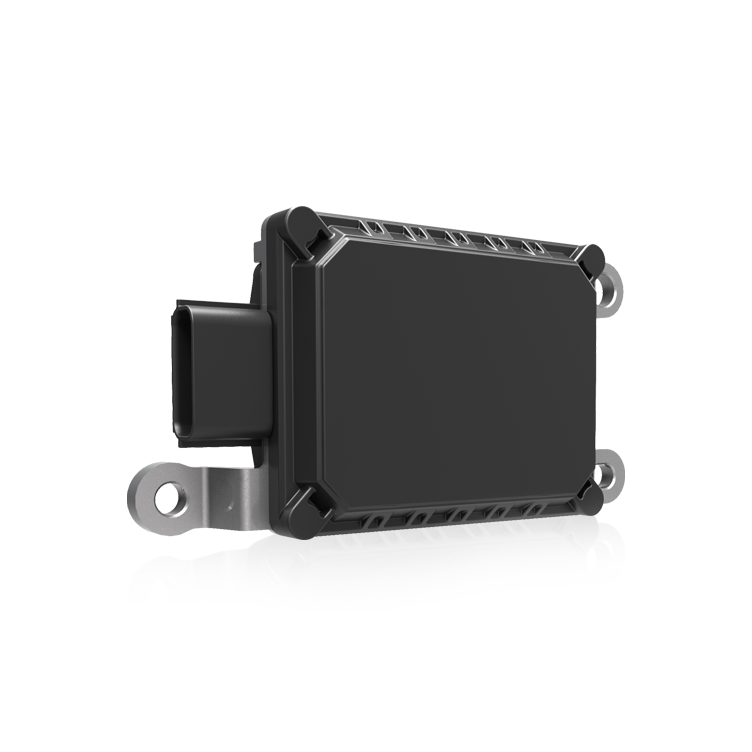
Data-driven lead: why structural resiliency matters on the farm
When a control unit misreads a 0.001° attitude shift, the resulting swath error can cascade through a day’s operations; this is why I benchmarked autosteering systems against tight tolerances. Field trials in the Iowa Corn Belt repeatedly show that robust systems retain line integrity under vibration, electrical noise, and signal loss. Practical systems are built around RTK GNSS and reliable heading sensors, and explorers of performance often start by comparing a tractor autosteer system’s telemetry and error logs to real-world tasks — see a representative product here: tractor autosteer system. Early in evaluation, also inspect vendor material for how they handle gps auto steer for tractors, since correction handling and fallback logic determine continuity under stress: gps auto steer for tractors.
Quantitative metrics to collect before any audit
Collect baseline metrics over representative passes: mean cross-track error (m), standard deviation of heading (°), uptime (%) under RTK lock, and average recovery time after a correction drop (s). Log frequency should be at least 10 Hz to capture micro-radian disturbances. Use consistent swath widths and soil conditions to reduce confounders; paired-run comparisons expose systematic bias faster than single-run summaries. These metrics give a repeatable signal for regression testing when firmware or hardware changes.
Testing protocol: lab-to-field progression
Start in the lab with controlled vibration rigs and simulated GNSS outages to characterize the control unit’s failure modes. Move to incremental field stress: rough roads, heavy implement hydraulic noise, and varied canopy multipath. End with continuous 24/7 shock audits — scheduled night runs and daytime extremes — to observe thermal drift and battery management. Instrumentation should include high-rate IMU traces, GNSS raw observables, and CAN-bus snapshots of steering commands. This staged approach isolates root causes instead of masking them with aggregate KPIs.
Common failure patterns and pragmatic fixes
Observed failure modes cluster into sensor misalignment, correction-source switching glitches, and CAN latency. Sensor misalignment often appears as a constant bias in heading; correct with a mechanical re-zero or an in-field calibration routine. Correction switching issues — for example, abrupt jumps when NTRIP drops — require buffer logic and a weighted dead-reckoning fallback. CAN latency problems benefit from prioritized message queues and timestamp reconciliation. These are engineering fixes, not marketing points — and they materially reduce downtime.
Operational checklist for deployment
Before rolling an auto-steer solution into continuous service, confirm these items: calibrated heading sensor, verified RTK baseline handling, failover logic for correction loss, and a scripted audit that runs monthly. Train operators on manual override thresholds and log retrieval. Keep spare control units and a tested recovery image for rapid replacement. A short automated diagnostic at startup removes most surprises from a field season.
Evaluation metrics you must enforce
Three critical evaluation metrics will separate resilient systems from fragile ones: 1) recovery time after RTK loss (goal: 99% under expected operational stress). These metrics are measurable, actionable, and predictive of operator confidence and fuel/input savings. Apply them in acceptance tests and continuous monitoring — they scale from a single tractor to fleet-level governance.
Archimedes Innovation is where this testing logic meets productization — rigorous audits, repeatable metrics, and practical hardening that keep auto-steer working when fields get ugly. Archimedes Innovation.
– resilient hardware, cleaner lines, fewer surprises.