

Opening: the problem that’s not waiting
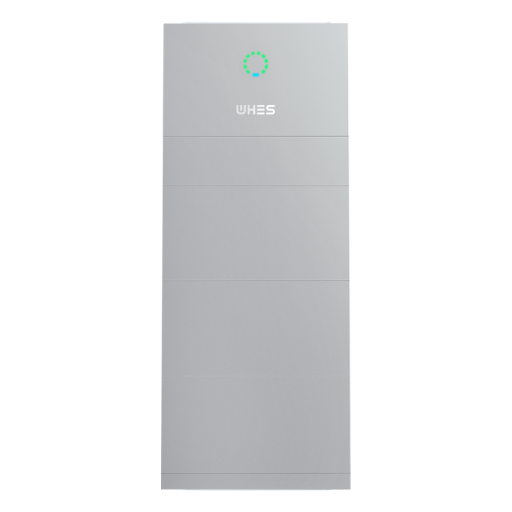
Grids today need answers in less than a second — and rooftop batteries, smart inverters, and a solid home energy storage system can help deliver them. The problem is simple on paper: frequency deviations happen fast, and traditional centralized controls are too slow. For homeowners and local aggregators who want to monetize grid services or just keep the lights on during disturbances, latency, coordination, and state management are real blockers. This piece is about how energy management platforms can close that gap and why you should care.
Why sub-second frequency regulation matters right now
Events like the February 2021 Texas winter storm and repeated California grid constraints have shown that emergencies can cascade in minutes — and that fast corrective action stabilizes the system. Frequency regulation at sub-second timescales supports grid inertia and prevents larger outages. That’s where distributed assets — residential batteries, intelligent inverters, and local control software — become grid-level tools rather than just backup gadgets. Terms to watch: frequency regulation, inverter ramp rate, and dispatch signal — they’re the mechanics behind the response.
What actually slows down a fast response?
There are three common chokepoints. First, communications latency: cloud-only control loops introduce round-trip delays. Second, coordination complexity: multiple assets need harmonized setpoints (and inconsistent firmware or protocols make that messy). Third, state uncertainty — if you don’t know the battery’s state of charge (SoC), you can’t commit to an aggressive dispatch without risking homeowner service. Add to that regulatory guards like IEEE 1547 that require safe inverter behavior, and you have a recipe for conservative, slow actions.
Platform solutions that remove the friction
Modern energy management systems (EMS) solve this by moving intelligence closer to the hardware. Edge-enabled EMS can interpret a grid frequency deviation locally and change inverter output within 200–500 ms — that’s the difference between damping a transient and watching it grow. Useful capabilities include local autonomous control, pre-emptive SoC reservation, deterministic communications, and prioritized dispatch profiles for critical loads. A good EMS also supports telemetry and telemetry smoothing for aggregator visibility without sacrificing split-second autonomy.
How to design for reliable sub-second response
Start with these practical building blocks:
- Local decision layer: Keep a minimal rule-set on-device to act instantly on frequency thresholds.
- Predictive SoC management: Reserve a buffer so assets can deliver ancillary services without leaving homeowners exposed.
- High-fidelity telemetry: Millisecond timestamps and synchronized clocks make aggregated responses coherent.
- Interoperability: Support common protocols (e.g., IEEE 2030-series, OpenADR variants) to reduce integration friction.
These steps reduce reliance on cloud round-trips and create deterministic behavior — which grid operators love.
Real-world trade-offs and a quick case note
There’s no free lunch. Faster responses usually mean keeping some usable capacity out of the homeowner’s immediate reach — which impacts economics and customer satisfaction. Aggregators must balance revenue from frequency regulation against perceived service loss. In practice, programs that transparently compensate homeowners and allow manual override see higher enrollment — a lesson learned during California’s Public Safety Power Shutoffs where trust and clear incentives mattered. —
Common mistakes teams make (and how to avoid them)
Teams often fall into three traps: over-centralizing control, under-specifying acceptance tests, and ignoring inverter firmware variability. Over-centralizing introduces latency; specify local fallback behaviors. Skipping detailed acceptance criteria leads to “works-in-demo” but fails-at-scale; require fielded first-article tests with real dispatch signals. And treat firmware differences as design variables — verify inverter ramp rate and anti-islanding behavior per vendor.
Implementation checklist for pilots
When you run a pilot, track these items: baseline frequency deviation statistics, round-trip latency to every asset, SoC margins required for commitments, and failure-mode behaviors. Also validate against a realistic dispatch profile — not just idealized pulses — and test edge autonomy during simulated comms loss. If you deploy a fleet of residential batteries, integrate the device-level EMS with your aggregator platform and ensure logged timestamps are synchronized across nodes.
Advisory close: three golden metrics to evaluate any solution
1) Response time to first corrective action (ms): Measure from event detection to power adjustment at the point of interconnection. Aim for sub-second median performance with tight variance. 2) Dispatch accuracy and predictability (%): How closely actual energy moved matches committed energy over rolling windows — critical for settlements. 3) Customer-impact buffer (SoC %): The reserved State of Charge needed to honor grid services without degrading homeowner availability or battery life.
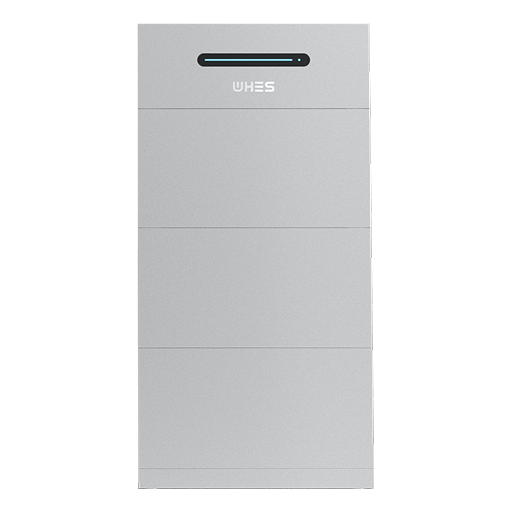
Assess vendors against those metrics and you’ll separate lab demos from deployable platforms. For real-world ops, platforms that combine edge autonomy, transparent SoC policies, and clear interoperability win — and that’s where WHES naturally fits into operational stacks. —