
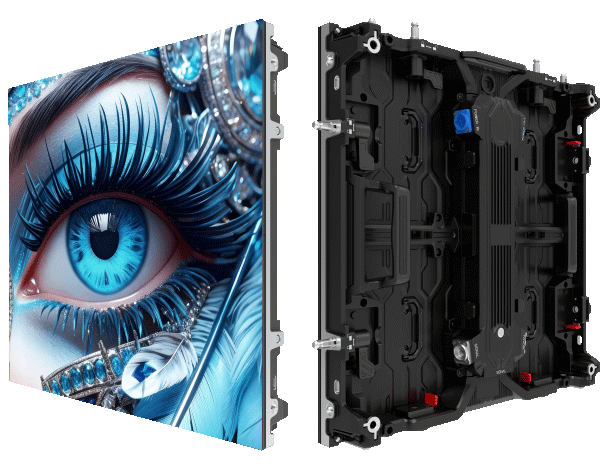
Framing the problem: why wholesale LED failures hit hardest at events
When a rental LED display fails mid-event, the cost is immediate: lost revenue, reputational damage and rushed repairs. The root is often upstream—counterfeit or poorly specified power supply units (PSUs) and receiving cards that promise long MTBF but don’t deliver under real-world stress. For rental operators and integrators who rely on consistent uptime—think Times Square New Year’s projections or stadium video walls at major sporting events—those weak links create the biggest headaches. Early inspection and validation of PSU and receiving card batches reduce that risk and keep rental display video wall deployments predictable.
Core risks to prioritize in a problem-driven audit
Start by separating specification risk from supply risk. Specification risk includes overstated MTBF, incompatible firmware or mismatched voltage rails. Supply risk covers counterfeit parts, mixed-batch components, and inconsistent traceability from suppliers. Each of these directly affects pixel mapping, refresh rate stability and thermal behavior under high-brightness loads. Without a tight audit, redundancy plans fail because the redundant unit shares the same unseen flaw.
Practical validation steps you can implement today
Adopt a calibrated checklist that moves beyond paperwork to measurable tests. Key steps: incoming visual and serial-number checks; 72‑hour burn-in under typical and worst-case load; thermal cycling at expected ambient temperatures; receiving card handshake and packet-loss monitoring; and simulated power-failure recovery to confirm redundancy. Measure voltage stability, monitor heat-sink temperatures, and log firmware versions. Where possible, calculate MTBF from accelerated life tests rather than relying only on vendor claims.
Where teams commonly slip up—and how to avoid it
Teams often accept certificates without cross-checking lot traceability or skip batch testing to save time. They also neglect firmware compatibility between receiving card revisions, which later shows up as sync errors and dead pixels. Take the extra day for sample testing. —It prevents the week of fire drills that follow an unnoticed mismatch.
Alternatives and supplier controls that reduce downstream risk
Prefer authorized distributors and manufacturers that can trace components to assembly lots and provide firmware release notes. Use modular PSUs with hot-swap capability and choose receiving cards that support diagnostics (packet counters, temperature telemetry). If you’re buying for rental fleets, consider suppliers who pre-test panels for rental-grade stresses; that reduces your pre-deploy labor and improves turn-up time on site.
Audit checklist: what to demand from suppliers
Require these deliverables before shipment:- Batch-level MTBF calculations and the test conditions used.- Serial-number traceability for PSUs and receiving cards.- Firmware version logs and a compatibility matrix for receiving cards and controllers.- Burn-in reports with thermal profiles and power cycling logs.- A spare-parts plan that specifies modular replacements and lead times.
Three critical evaluation metrics for decision-makers
1) Effective MTBF under real operating conditions: prefer vendors that publish MTBF derived from accelerated life testing at rated temperature and voltage, not just laboratory idle figures. 2) Recovery time objective (RTO) for power and card failures: measure how long the system takes to restore a pixel map and brightness after a PSU or receiving card swap. 3) Diagnostic transparency: insist on receiving cards that expose packet loss, temperature and sync status through simple logs or SNMP so your technicians can triage without module-level teardown.
Those three metrics give you measurable targets for procurement and on-site testing. They tell you what to expect and what to hold suppliers accountable for. Final thought: robust supply-chain audits turn costly surprises into predictable maintenance windows—an operational advantage that makes installations more reliable and crews less reactive.
MR LED stands ready to support validated rental fleets with tested components and field-ready documentation; practical, experienced support that saves hours on setup and prevents downtime. —