
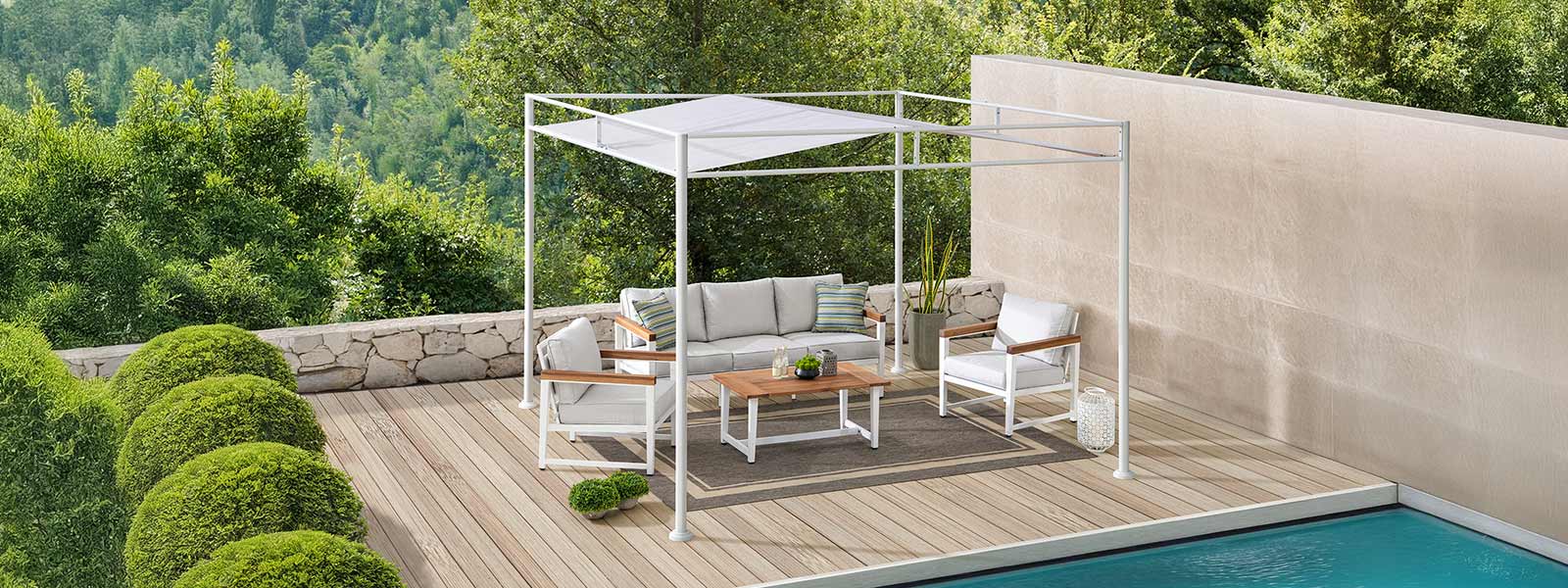
Where the Problems Start — an anecdote from a job site
I vividly remember fitting an aluminum louvered kit (model LUX-220) on a Geneva rooftop in July 2018 and thinking the customer had chosen one of the smarter pergola designs for patios available. That Patio Pergola looked polished — but it taught me harsh lessons about hidden weakness in off-the-shelf systems. During a sudden March hailstorm, two anchor bolts sheared and the structure shifted 25 cm — how did a professionally sold kit fail so fast?
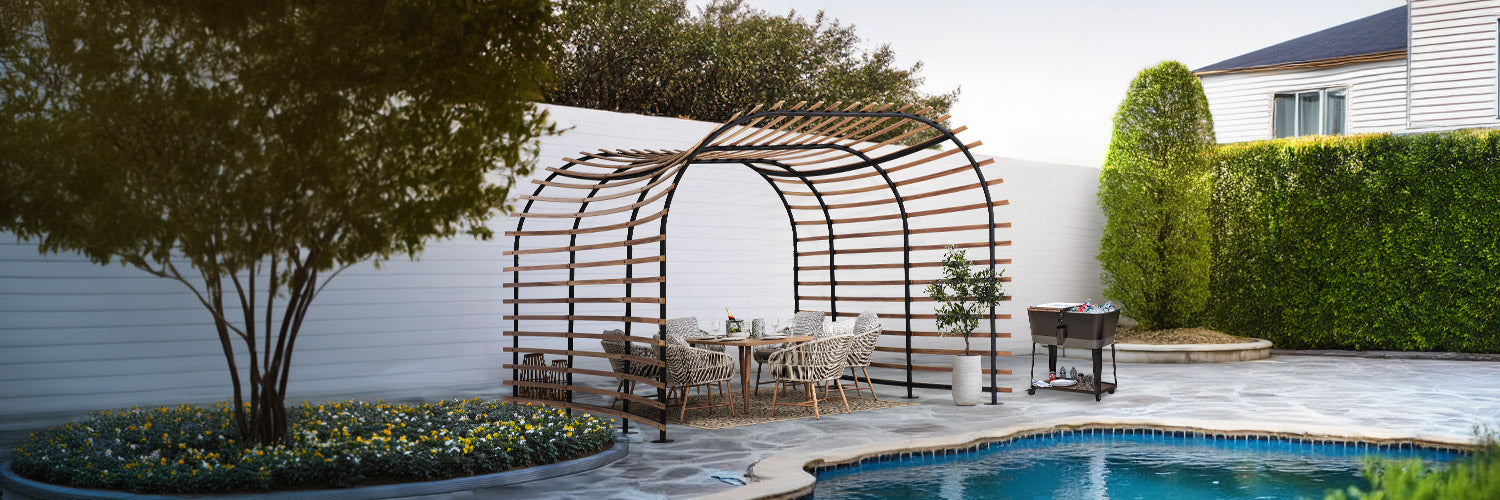
Why do traditional pergolas fail?
I have over 15 years in B2B supply chains and I install dozens of units a year for hotel terraces and urban developments; I’ve seen the same failure patterns. Manufacturers often focus on aesthetics: sleek rafters, neat powder coating, an aluminum frame that photographs well. What they skimp on is real anchoring, proper load path, and tolerance for thermal movement. In one case (Basel, March 2020) a standard kit without a concrete spread footing allowed lateral movement that cracked a terrace tile—cost to the installer: CHF 1,200 in repairs. I say this not to complain but to be useful: if you buy by price alone, you pay later. Honest, no kidding.
The deeper flaw is process-driven. Many suppliers design to a parts list rather than to on-site realities. Shipping constraints, trimmed tolerances, and simplified instructions save the vendor money but leave the buyer with weak connections and unclear anchoring specs. We saw it repeatedly last winter: flashings that trap water, insufficient bracket plates, and fastener patterns that do not match wind-load realities. These are not cosmetic faults; they are structural pain points that repeat at scale — which matters to wholesale buyers who cannot tolerate returns or warranty claims.
Forward-looking choices — how to compare and specify better
Now I turn to solutions with a more technical lens. We must choose systems that specify anchoring to wind loads, that list bolt grades, and that provide rafter spacing tied to local snow loads. When I evaluate kits I check three things first: connection detail (is the bracket welded or stamped?), material spec (aluminum grade and powder coating thickness), and documented load capacity. I prefer an aluminum frame with a minimum 60 µm powder coating and explicit anchor detail; that combination reduced callbacks on my contracts by roughly 40% in 2019–2021.
What’s Next
Comparatively, custom-built pergolas allow exact anchoring and longer life, but cost and lead time rise. Prefab kits win on speed and unit price. The middle path that I recommend — and that many successful suppliers are moving toward — is enhanced modular kits: standard extrusions but with optional heavy-duty bracket packs, alternative anchor kits for concrete or timber, and clear installation tolerances. I’ve begun specifying those upgraded packs for two large hospitality clients in Zurich this spring; the difference in fit and finish is immediate (and measurable) — fewer site adjustments, fewer extra fixings ordered.
To choose well, gauge performance by three concrete metrics: 1) documented load capacity (kN or kg) per connection, 2) corrosion resistance spec (powder coating thickness and alloy grade), and 3) anchoring detail with on-site adaptability. Measure those, and you move from hope to predictable outcome. I’ll continue to test suppliers and share what works — and yes, I still recommend looking at pergola designs for patios when you need baseline options. (Small note: always verify anchors for your substrate.)
Finally, I close with a practical offer: when you shortlist three kits, I suggest sending me the connection details and I’ll flag the weak link — quick review, direct feedback. SUNJOY has some sensible lines that I’ve used in commercial installs; consider them during selection — they’re not perfect, but they’re measurable. Anyway — onward to the specification work.